
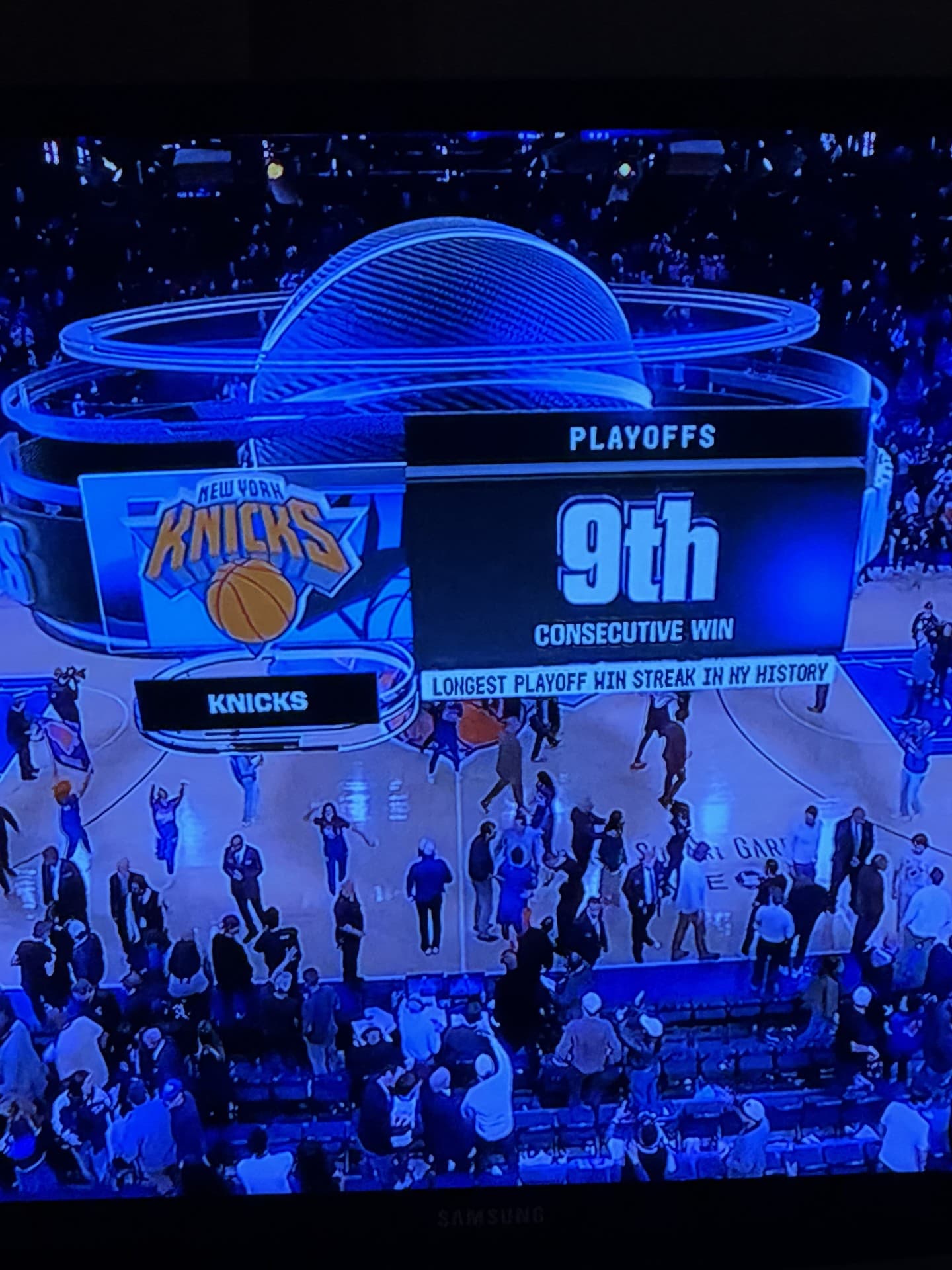
- The best organizational case study of the year came from a basketball team that swept its way to a title and left $260 million in unrealized economic value on the table doing it.
- Four specific decisions made the run possible. None of them happened by accident.
- Winning fast creates a planning gap. If you are not ready to receive the win, you will leave money on the table the same way the Knicks did.
- Two million people showed up to the parade on a Thursday morning. That is what a winning culture does to everyone around it.
- Build the capture infrastructure before the win. Not after.
The best organizational case study I have seen in years did not come from a boardroom, a TED talk, or a Harvard Business Review article. It came from a basketball team that was so dominant they created a $260 million revenue gap by winning too efficiently. Here is what every founder needs to take from it.
The New York Knicks just ended a 53-year championship drought. Jalen Brunson dropped 45 points in the clinching Game 5, was named Finals MVP, and stood on a stage at City Hall in front of two million people and said: "Damn, New York. We really did it."
And I cannot stop thinking about it from a business lens.
I flew to Atlanta, Cleveland, and San Antonio to watch this team win. I was in the building. I saw what this run did to people. And now that the confetti has settled and Alicia Keys has performed Empire State of Mind at City Hall and the city has handed out keys and cried and celebrated in a way New York has not celebrated in over half a century, I want to talk about what actually happened here. Not just on the court. In the organization.
They Were So Good It Cost Them Money
Point Differential
Best in NBA playoff history, breaking the 2017 Golden State Warriors' record. They came back from double-digit deficits in all four Finals wins.
Down Double Digits
The best record in 30 years of data for games trailed by double digits. Every single Finals game was within five points in the last five minutes.
Unrealized Value
The city projected $465M in economic impact and generated $202M before the Finals. Sweeps of the 76ers and Cavaliers alone cost MSG Sports roughly $29M in revenue.
They were historically dominant. And it cost them.
The sweeps of the 76ers and Cavaliers in the earlier rounds took away roughly $29 million in potential revenue for MSG Sports alone. The city projected $465 million in total economic impact for the full postseason run and generated $202 million before the Finals, leaving over $260 million in unrealized economic activity on the table. And that does not count the NBA's lost gate revenue from shortened series, lost broadcast inventory, and lost merchandise cycles across multiple rounds. They were so good at executing that they outran the financial model built around their success.
The NBA runs on a roughly $76 billion, 11-year media rights deal and a New York team in the Finals does not change this season's check, but it strengthens the league's hand in the next rights negotiation by proving it can deliver the largest market to a national audience. The Finals averaged more than 20 million viewers on ABC and ESPN, the most-watched postseason since 1998.
So the NBA, the city, and MSG Sports all left money on the table in the short term. And all of them will make significantly more money in the long term because of what this team did. That is the tension every founder needs to sit with.
The Decisions Behind the Culture
This is the section most people skip. Everyone wants to talk about the run. Nobody wants to talk about the four or five decisions that made the run possible. Because the run did not happen by accident. It happened because the right people made the right calls at the right time, often under enormous pressure and public scrutiny.
Decision 1
Brunson took $113 million less than he could have gotten.
In May 2024, Brunson signed a four-year, $156 million extension, leaving $113 million on the table compared to the five-year, $269 million supermax deal he could have secured the following summer. That decision gave the front office the flexibility to build a real roster around him. With that flexibility, the Knicks traded for Mikal Bridges, extended OG Anunoby for five years and $212 million, and traded for Karl-Anthony Towns and his $220 million contract. Brunson said it simply: "If I'm thinking about playing well to make sure I get paid, that could mess with me. I play best when I have a free mind." That is a culture statement, not a contract statement. When your best player sets aside personal financial maximization for collective success, everyone else takes notice.
Decision 2
They fired a coach who just took them to the conference finals.
The Knicks fired Tom Thibodeau immediately after he led them to the Eastern Conference Finals in 2025, their first appearance at that stage in 25 years, and hired Mike Brown. That is an incredibly hard call to make. You just had your best result in a quarter century and you decide it is not good enough and the leadership needs to change. Most organizations cannot make that call. Brown brought a different philosophy: be the boss without being bossy. He created open dialogue from day one, giving everyone from the front office to the players a say before making final decisions. Under Brown, the Knicks improved from 28th to 12th in three-point attempt rate, from 21st to 10th in average distance traveled per game offensively, and reduced starters' minutes across the board. Same roster. Different leader. Completely different result.
Decision 3
Brown made the hard adjustments in the moment.
When Mikal Bridges was scoreless in 21 minutes in Game 3 against Atlanta with the Knicks down in the series, Brown stuck with him. He also restructured the offense mid-series to run through Karl-Anthony Towns as a passer rather than Brunson as the initiator, opening up the floor entirely. The dialogue on that call according to Brunson was simply: "OK, let's do it." That is a team that trusts its leader completely.
Decision 4
They built depth so no single breakdown could end them.
Landry Shamet, signed at veteran minimum, swung Game 1 of the Eastern Conference Finals off the bench. Jose Alvarado, a backup point guard, closed out Finals games alongside Brunson. The Knicks were not a one-man team. They were a system. And systems survive adversity in ways that star-dependent organizations never can.
Every one of these decisions was made under pressure, in public, with critics screaming. Every one of them was right.
What They Should Have Built Before They Won
Here is the honest business critique. And I say this as someone who loves what this team did.
The Knicks' revenue shortfall was not inevitable. It was a planning gap. When you build a team capable of sweeping opponents, you need a parallel infrastructure built to capture value at every stage of the run, not just the home games that make it onto the schedule. The city projected $465 million and got $202 million before the Finals because nobody built the system to monetize the road. Nobody built the merch surge infrastructure. Nobody pre-sold the parade sponsorships. Nobody locked in the watch party licensing deals before the run started. The result was over $260 million in unrealized economic value, not because the team underperformed, but because the infrastructure around them was not built to keep up.
Analysts note the championship run will have lasting effects, raising next season's ticket prices, lifting merchandise for years, and unlocking sponsorship and suite rental fee increases. That long tail is real. But a more prepared organization would have captured significantly more of the short tail too.
The parallel for founders is this. If you know you are building something that could scale fast, do not wait until it scales to build the infrastructure around it. Build the capture systems before the win. Build the onboarding before the customer surge. Build the fulfillment before the demand hits. The Knicks swept two rounds and left over $260 million in unrealized value on the table because the model was built for a longer run and they finished too fast. Your business will do something similar if you are not ready for it.
What This Means for Your Business
Two million people showed up to the parade on a Thursday morning. The biggest city in America turned into the smallest town. CNN described New Yorkers who would not make eye contact with strangers on the subway now high-fiving each other in the streets in a state of pure jubilation. That is what a winning culture does to everyone around it. It closes gaps nothing else can close. It makes strangers feel like teammates. If you can build that inside your company, you have something most organizations will never have.
The Knicks built around a leader who took less so the team could have more. They made the uncomfortable leadership change at the exact moment it needed to happen. They built depth so no single breakdown would break the system. They built a comeback culture so deep it became an expectation. And they did all of it in the most brutal, loudest, most unforgiving market on earth.
Brunson at City Hall said: "There's a lot of people who have a lot of opinions. When you prove them wrong, you don't have to say anything to them. They don't deserve it."
Put your head down. Build the thing right. Build the capture infrastructure before you need it. Execute under pressure. Let the results speak.
The Knicks just showed eight and a half million people what that looks like.
Now it's your turn.
Build the Thing Right.
If you want to work with people who think hard about go-to-market strategy, accountability, and building something that actually holds, let's talk.
Book a Free GTM Assessment →