Say It So They Buy ItEpisode 5
Turning Word Of Mouth Into A Go To Market Engine
Bhaskar shares what has worked over 30 years, why trade shows and word of mouth still carry the business, and the real constraints of his industry, including confidentiality agreements that limit what any client work can be shown publicly.
About this episode
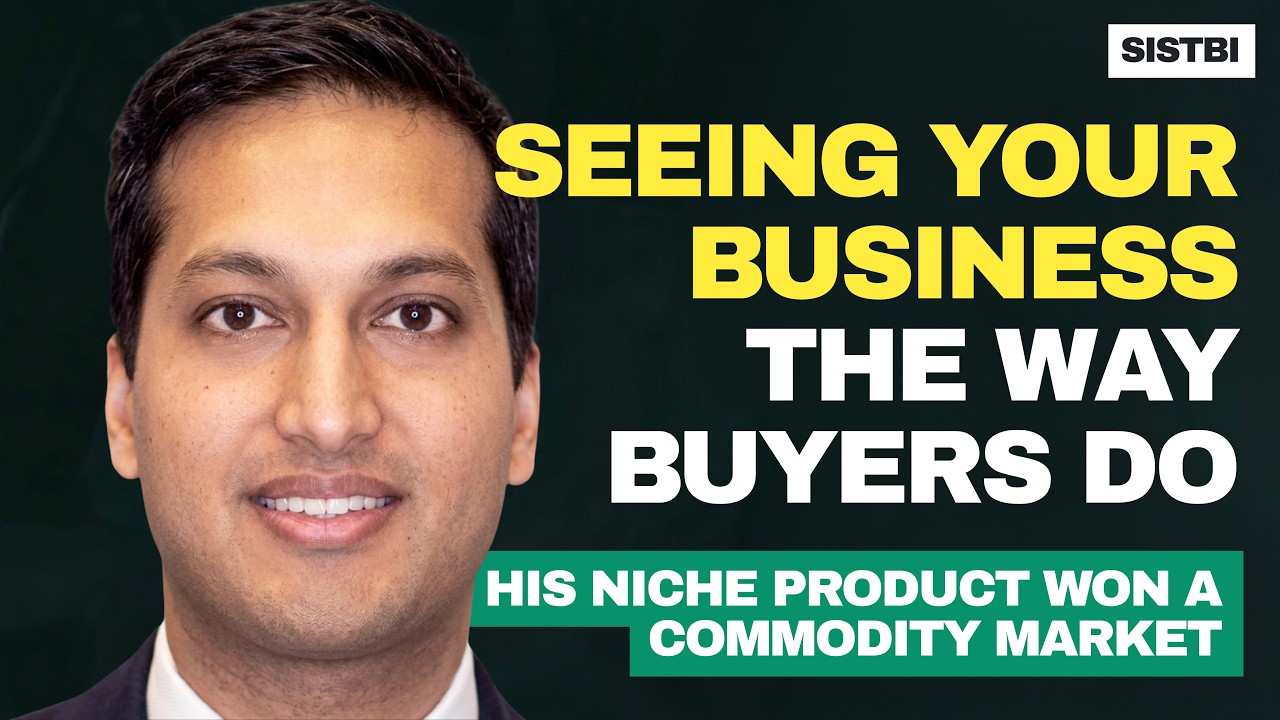
Some businesses are built the slow way. Bhaskar Venepalli grew up in a farming village in southern India, earned his PhD in chemistry, came to the US as a postdoctoral fellow at Eastman Kodak, and then left to start his own contract research lab in Cary, North Carolina. Three decades later CiVentiChem runs discovery chemistry for pharma and biotech innovators, with a research operation in India and business development across the US and Europe, built on client relationships, technical depth and a reputation people pass along by hand.
In this episode Mark Gordon and Bhaskar sit down to work through the question a lot of founders in that position are asking right now: how do you grow a relationship-built business when the way buyers find and choose partners has completely changed?
Bhaskar shares what has worked over 30 years, why trade shows and word of mouth still carry the business, and the real constraints of his industry, including confidentiality agreements that limit what any client work can be shown publicly. Mark brings the go-to-market side, including where CiVentiChem is already strong, and the four-part order of operations he uses with every client: messaging first, then lead generation, then sales, then the revenue technology that holds it together.
A practical, generous conversation for any founder whose best asset is a reputation that currently lives in other people's heads.
Thanks to Bhaskar for an awesome conversation.
Also in the conversation
- Why separating the person who hunts for new logos from the person who manages accounts changes new business more than any tool.
- How to identify the specific expertise that makes buyers less price sensitive.
- What a realistic 10 to 15 percent growth plan actually requires.
- How to stay in front of the right buyers when nobody answers email anymore.
In their words
“I tell my, my ch- my, my chemist that we are like a barbershop. You know, I like your hair, right? If you, if you l- if you go to a barbershop, you are happy with their, how they have done for your hair, you'll go there again. If not, you will not go there. You tell your friends not to go there.”
Bhaskar Venepalli · 2:19
“if you let a salesperson, a hunter, who's supposed to go out and get new business, derive satisfaction from or reward from doing any other work, they will then choose that other work over hunting, even if that hunting is the thing that pays them best.”
Mark Gordon · 19:04
“In the beginning in my business, I used to have all my clients' logos and tell some stories with their, what we have done. So because of that, we changed that. We removed the clients' names from our website”
Bhaskar Venepalli · 9:31
“what we find is that companies that score over 70 on this test are growing at two and a half times the rate of companies that score under 60.”
Mark Gordon · 6:17
Chapters
Listen here
Questions this episode answers
What does CiVentiChem do?
It is a contract research organization, or CRO, based in Cary, North Carolina with operations in India. A team of mostly PhD chemists provides discovery chemistry services to pharma and biotech companies under contract, with the IP belonging to the customer.
Where does CiVentiChem's business come from today?
Mostly word of mouth, relationships, and trade show meetings. Bhaskar said most direct work comes from small to mid-size innovator companies, and work with large pharma now happens indirectly through their manufacturers since much of that volume moved to China.
Why did CiVentiChem remove client names and logos from its website?
Bhaskar said competitors were taking their information, and most of the work is under confidentiality agreements, so they pulled client names from the website and presentations and now tell stories indirectly.
What gaps did the go-to-market assessment find?
Three main ones: it is hard to identify the ideal customer and the specific problem solved on the homepage, the conversion infrastructure does not capture or follow up with visitors, and there is little outcome proof or case study material. Strengths included operational and technical credibility, consistent positioning across channels, and strong founder-led credibility and SEO.
Should a salesperson also manage existing accounts?
Mark argued no. People avoid the pain of rejection, so if a hunter also has account work, they will pick the path of least resistance. He recommended at least one person in the US and one in Europe whose only job is bringing in new logos.
What does Mark's four-month go-to-market overhaul include and what does it cost?
Month one is interviews with the founder, team, and clients to define what makes the company special, then messaging, lead generation, sales team alignment, CRM and revenue tech setup, a sales call scoring tool, and an AI marketing brain for brand consistency. The price is $70,000 total: $25,000 upfront and $15,000 in months two, three, and four.
Full transcript6,083 words
Mark: Uh, my name is Mark Gordon, and this is the Say It So They Buy It podcast. I'm here with a very special guest today, Bhaskar Venepalli, who is the founder and CEO of CiVentiChem, and they do, uh, all sorts of chemical work. He's located in North Carolina. They have manufacturing in India. I'm really excited to learn about your company.
Mark: We're gonna have a quick 30-minute chat today. Just give my audience a little bit of a sense of, a 90-second story on your background from the farmland in India to how you ended up here today.
Bhaskar: Wow, 90 seconds, huh? Let's start-
Mark: Three minutes, maybe ... right now.
Bhaskar: So I grew up in a small village n- in India, in, in the southern part of India from a farming family, and then I was fortunate to go to school, complete one after the other, get PhD degree in Osmania University in Hyderabad, came to America as a postdoctoral fellow, worked in Eastman Kodak. Then I wanted to start my own company, so I left my job and started this company in Cary, North Carolina. So that's where we are located right now.
Mark: Tell me a little bit about what the company does. I know I did all the research and everything, but I kinda wanna hear it from you. It sounds like you guys do lots of stuff, so I'd love to hear from you kinda how you break that down.
Bhaskar: So CiVentiChem is a, a, a contract research labs. Basically, this called CRO in our industry. We provide, we are a service organization. We provide discovery chemistry services to pharma biotech companies. So for example, companies like Merck or Pfizer, they do lot of internal discovery chemistry development. Several years ago, these companies used to do everything in-house. They have large discovery chemistry, they develop molecule, they de- the, they develop them further, they manufacture, they, they do clinical trials. But around little 1990s, they started outsourcing some of this work. In the beginning, they used to outsource clinical trials work, then they slowly start outsourcing manufacturing.
Mark: Now they outsource discovery chemistry also.
Bhaskar: Right. So that's how companies like us got formed. Uh, all this started mid-'90s to late '90s, and now it's, like, a very commonly done phenomena where we work with companies who require chemistry disc- research and development.
Mark: Right.
Bhaskar: And we are a bunch of chemists, mostly PhD degree, and then they, all our work we do is for them under a contract. It, IP, everything belongs to our, our customers.
Mark: Okay, great. So tell me, how do you get new customers now? Where do your customers come from?
Bhaskar: So it used to be fairly straightforward several years ago. Now it has become very competitive, like always things happen in the world, right?
Mark: Right.
Bhaskar: So in the beginning, you know, customers come to you because they know you, they hear about you, and we meet them in some trade shows. But now everybody's doing the same thing all over the world, India, China, United States. So we are very cognizant, very, uh, uh, we work very hard to identify customers and then develop their trust. This is all based on the trust and how well you serve the customer. If you serve them well, they keep, they stay with you, and they give you more work. So if you don't serve them well, they don't do, they, they'll, they do the opposite. So it's almost like a service model. I tell my, my ch- my, my chemist that we are like a barbershop. You know, I like your hair, right? If you, if you l- if you go to a barbershop, you are happy with their, how they have done for your hair, you'll go there again. If not, you will not go there. You tell your friends not to go there.
Mark: All right, 100%. So let me ask you, just I wanna get a sense of the distribution of your business. How, what percentage of your business is, like, Fortune 5- Fortune 500 companies, the big companies like the Mercks of the world? And then what percentage of it is, like, smaller, mid-size organizations that are looking for somewhere where they can manufacture these things?
Bhaskar: So directly, most of our work is small to mid-size companies. What happened is large companies in United States started going to China, large companies in China trying to do this lately, so most of their work goes to China. We used to work with them several years ago, with the names we mentioned, but today we work with them indirectly through their manufacturers. So-
Mark: Got it.
Bhaskar: ...so today I would be honest with you and say that most of our work, yes, we do work with some large companies. But most of our work is from, uh, innovator companies, small to mid-size companies.
Mark: Wonderful. So what we do at my company and what we're exploring here on the podcast today are some of the things that we think are fundamental to go-to-market strategy, and, and it's really changed a lot, um, over the last even 10 years in terms of how do you get your messaging in front of the right people at the right time, and how do you build that credibility before you talk to somebody or even after you've spoken to them and before you've had the opportunity to work with them? And we've come up with some, some proprietary-type things that we do to evaluate that, and I kinda wanna show you 'cause I think, you know, I have so much respect for the work that you do, and obviously you guys have an amazing reputation as a company, and your work is incredible. But I think there's some opportunity for, for you guys on a- from a digital presence to communicate some of that a little bit more directly. Do you mind if I show you?
Bhaskar: Absolutely. Allow to... A- any new tools, my friend, we need to use them, right? So let's see how it works.
Mark: Awesome. So this is an assessment that we created. It's proprietary here, and the, the goal was, how do we create a score that represents if your ideal customer finds your company, comes to your website, does a Google search, looks you up, how likely are they to know that they're your ideal customer? That how likely are you to capture their information, right? In terms of make sure that you reach back out to them and get in touch with them. And then how likely are they to get the credibility online that they would get if they had actually worked with you? And so in other words, are you communicating your 30 years of experience and credibility effectively to a stranger that does need your services but doesn't know you yet? Does that make sense?
Bhaskar: Yes, it does. I, I, I'm going to share this to me later because the- I can see this nicely, so let me look at my m- bigger screen.
Mark: Okay. All right. Yes, go ahead please.
Bhaskar: Uh-huh. Perfect. How do you-
Mark: Yeah.
Bhaskar: At some point I want to find out from you, Mark, how you found us, 'cause we are not a large company. We don't advertise a lot. I don't know it is the right time, but I know you asked me for my intro, but I didn't ask you that, but at some point I'll be curious to know how you found because we don't advertise a lot. Most of our work is with customers under confidentiality agreements. We don't publicize what we do.
Mark: Yeah, um, um, we were specifically looking for companies that we thought had really excellent reputations and longstanding, um, reputations of working with big companies and doing a great job, but that we thought were leaving some opportunity on the table when it came to, like you said, publicizing what they do and trying to grow. And again, all this only matters, by the way, if you're really looking to grow. But I think it's an interesting exercise to walk through because, again, we see companies that are, that s- stood up eight months ago that get really good at telling their story, and they're able to, to knock out this digital credibility, and they don't have nearly the type of track record that you have. And so our job is to really help the companies that we think, uh, do the best work get, get found, discovered, and, and communicate what they do effectively. So we, we grade these on 25 different categories, and I'll walk you through this and I'll share it with you. Um, but what we find is that companies that score over 70 on this test are growing at two and a half times the rate of companies that score under 60. And if you're under 50, you're relying on either founder-led sales or that kinda conference-led type sales that you were talking about, where it's person to person. In other words, people are unlikely to find you digitally and decide to reach out, which it sounds like is your experience, right? You're saying that generally you guys have not invested in, in PR or, or trying to attract business, um, f- not through your network. Is that, is that kind of a fair assessment?
Bhaskar: Yes. I mean, we have done some PR, some advertisement, not a lot, through, uh, s- several write-ups. Some of our customers-- Most of our businesses comes from word of mouth, if you will, if you know what I mean. But we also meet people and then do that, yes. But so we have not done a lot of PR work because, frankly speaking, we are not that large a company, Mark. We are still, like, a, you can say, mid-sized company. We are not a pr- We are a private company, so we have not done a lot of PR work. Like, if you are a public company, you have a PR wing to do your PR thing, right? So we have not done that.
Mark: Yeah. Sure. So obviously, there are some top strengths, right, that we identified, right? Strong operational and technical credibility is awesome. Um, there's consistency, consistent positioning across your website, LinkedIn, Crunchbase, and other directories. And there is a lot of founder-led credibility. Like, your background adds a lot of credibility. And again, this is all an AI report, so this isn't, like, something that we put together. This is what our, our tool identified for you guys. Where it said the top gaps were, were that when I first get to your website, and I agree, and I'll show this to the audience in a second, it's very hard to identify who your ideal customer is and, uh, what problem you exactly solve for them. If you go deeper in the website, you can find it, but on the, on the front, it's a little bit difficult. The conversion infrastructure is underdeveloped, meaning that when someone comes to your website, there's a good chance you're not gonna capture their information and be able to reach out to them to, to start your sales process. And then really, whether it's because you're protecting the identity of your clients, and I understand there's some, always some compliance things like this in certain spaces, you haven't really done a lot of outcome proof, meaning where you're telling the story of your successes that you've had with your past clients. Does that sound fair?
Bhaskar: Yes. Uh, I-- Yes, some of them are high-tech. I, I have a small y- one young guy, so I work on that. But going back to the bullet three, Mark, I have our own presentation, maybe we should load our presentation in our website, that shows some of these. But bullet three, I used to show my clients in my presentation before, Mark, but what I found out is our information gets stolen by other, our competition, okay? So, it was not helping me. It was... So in the beginning in my business, I used to have all my clients' logos and tell some stories with their, what we have done. So because of that, we changed that. We removed the clients' names from our website and our presentation, and we do tell some stories indirectly because, as I said, most of the work we do is under confidentiality agreement. We really cannot divulge to people what we do. Okay? Yeah. That's why the bullet three, I'm not sure how it's going to he- help us, but that's what happened, just so you know.
Mark: Understood. I get it, and I think there's, there are always strategic choices that we make as business owners about what we do and don't do. I think what I will say is having those client, um, logos up there is the credibility that separates you from anybody else saying they're in your space, right? Those logos become, um, the credibility that people are looking for when they decide who they want to work with or at least who they want to reach out to and consider. So our first category is clarity of market fit, and as you'll see, and again, I'll send this to you, and we're not going to go through every piece of it in detail. But really there's opportunity, I think, to both be more specific about who your ideal client is and more specific about what problem you solve that other people in your space either don't solve or don't solve as well. Um, and then again, we already talked about kind of the opportunity with outcome proof and, and having those different things, right?
Bhaskar: Okay.
Mark: Um, website discoverability is awesome. So from an SEO perspective, you're doing a very good job. Um, but there's a lack of what we'll call social media outside of your own personal branding, um, for the company. Not, not surprising, by the way, in the chemistry space. Maybe there's no place for it. Doesn't mean you're really missing anything. Um, and then really there's an opportunity for what we call a buyer education path, which means you're walking somebody through the decision of who and how they should make a decision of who to use for this. There's some opportunity there on your website as well. Now, from a conversion infrastructure perspective, this is where I think there's the most opportunity, which is I think right now you're probably not identifying exactly who is coming to your website, and if they do, you're get- not getting them to opt into anything, or if they are opting in, you're not fo- having an automated follow-up path. So I think there's definitely some conversion infrastructure things there in just, in terms of identifying, hey, who's discovered you, and how do we go ahead and stay in front of that person on a, on a go-forward basis? Um, again, we kind of talked about some of this, you know, use cases and case studies. You know, it's-- this is not one that I would worry about for your industry. It doesn't really make sense for you to have clearly defined offers for what you do. But, um, you know, otherwi- also having objection handling signals, which is really assigned to the LLMs like ChatGPT and Claude. This is why people choose us, this is why they should choose us, and so that's a kind of a frequently asked questions or objections section on the website that you can add. Uh, and then the last category is this kind of technical go-to-market enablement, which we already talked about, which is just kind of the blocking and tackling parts of converting somebody from a website visitor into, uh, somebody that you're marketing to and a potential client, but you do have great operational maturity there as well. The last thing we always look at is generative SEO score, meaning how likely are the LLMs to recommend you, and a five out of 10 is a solid score, but there's some opportunity here, I think, for you to improve that as well. So as I go through this and I talk about some of these things, a question I have for you is, and people have very different takes on this, do-- is your website a sales tool for your organization or is it something that you just need to have for credibility?
Bhaskar: Mostly for the latter, okay? Uh, as I said, our business is mostly relationship-based. It's, it's not like Amazon where people go and, uh, you know, find something and click on it and order. We, no, we don't get any orders from our website because we are a service organization. And, uh, so, so our website is for information, but one thing you mentioned will be useful to know. We used to do that several years ago, almost 15 years ago. Like with Google, we had this thing where how many people click on our website, can we follow up? So we had a young lady rece- reaching out to them, okay? This happened about 12 years ago, Mark. Yeah. But it did not really serve us well, so we stopped that exercise, but maybe it's time for us to revisit this. That we don't do today. That is, uh, who visits our website, can we follow up with them, okay? Uh, and then so we have a LinkedIn presence very well. That's pretty much it. We don't do Facebook, and we don't do anything s- other like Instagram and all because frankly speaking, in my opinion, we don't belong there, okay?
Mark: Yeah.
Bhaskar: Because type of people we look for are mostly highly technical people, and these are all bombarded by many people like us, okay? So another problem I see, Mark, is, you know- People used to be kind enough to at least respond to emails or phone calls before. Forget phone calls, emails, okay? At least, "No, I'm not interested," but today you don't see that. Maybe that's how world is changing. Like, I get so many emails, I don't even bother responding to them. Maybe everybody's like that. So definitely we have an issue with this situation. I don't know how we overcome that. I'm telling you. So it's in our-
Mark: No, but well, no, that's... Listen, that's, that's what we help people with. I mean, I think, you know, uh, uh, your, your, your cl- companies like yours are our favorite clients, and I don't, and I don't say that, you know, lightly, but it's, we have a really great track record. We find these companies that built their reputation through doing really great work. They did it over a long period of time. The world of sales and marketing is constantly changing and evolving, and it's, it's not, you know, there... It's not like there are a bunch of other companies in your space that are doing this stuff in a public way that you can copy. You're not running a marketing firm, right? There's not, you know, it's a, it's a limited, limited sphere of influence type organization. And so, you know, there's a... What you really have to do is kind of figure out what your math is and, and we always talk about is like, "Okay, what's our total addressable market? What, you know, what, what's a list of all the companies we would like to be working with?" And then really understanding, okay, what do we think the estimated value is of us getting one of these organizations as a new client, and a lifetime value or three-year value, kind of figure it out that way. And then you have to figure out, okay, what's a co- a comfortable for us, what we call customer acquisition cost, meaning if I add up all of my sales and marketing, how much can I spend to go get a new client? And then based on that, we develop a strategy that makes sense. And so sometimes it's running ads on LinkedIn. Sometimes it's just having a really specific sales motion and going to conferences, and then understanding what your follow-up strategy is with those connections so you stay in front of them. Maybe it's a newsletter. And there are literally infinite ways to skin the cat. And so what we like to do is come into a business and say, "Okay, let's really understand your business model and kinda where is your product market fit," right? And h- by the way, the other thing we do is say, "How do you compare to the other companies in your space, and where are the areas where you have specific expertise that makes s- people less price sensitive to that?" Meaning that where you're not just a commodity, 'cause they can go to China and get the same thing. Where is your personal expertise or somebody on your team's personal expertise that, beyond just doing the work, makes somebody feel warm and fuzzy or comfortable about you having a specific expertise in their lane? And so those are the things that we look at when, when we devise these processes, and every company's different. That's what makes what we do here so fun. Um, but it's, you know, what I will say is that the website is an instant credibility tool, and it's, and it's a subconscious one, meaning that when someone's considering you, they go to the website, and you have three seconds to grab their imagination and let them know, "We specifically specialize in solving your problem." And if you miss that window, they're already gone, right? It's the ADD generation, right? They're just, they're just gone. And so you have to be able to capture that imagination and then capture that they visited so that you can get them other marketing and kinda retarget to them in other ways and stay in front of them. Um, and what we've found is that when companies build a comprehensive strategy, it doesn't have to be an expensive one, but a comprehensive strategy to stay in front of the people they've gotten attention for, that's where we really see sales and marketing start to pick up. Um, but also you have to have the right salesperson. You know, what does your sales team look like now?
Bhaskar: So we, we have about, uh, two people in Europe, two people in the United States, couple of guys in Hyderabad, India. So we, we really, uh, we call, we don't call, you know, sales like, but mostly we call product managers. They work with the clients closely, and then they also go and sell. Okay? They go, like, we go to trade shows, occasionally meet some people, and that type of thing. So today, again, my two guys in the BD people in North America we have, they're all professionals, been in their marketplace for a long time, so they're trying their best to get it going, but definitely our market has become very competitive, let me put it that way.
Mark: Right. And, and, you know, this is another thing that we struggle, you know, 'cause sometimes there's budget reasons to combine roles like that, and I get it. But what we find, and this is all across all industries, if you let a salesperson, a hunter, who's supposed to go out and get new business, derive satisfaction from or reward from doing any other work, they will then choose that other work over hunting, even if that hunting is the thing that pays them best. Because as human beings, we avoid pain instinctually, and prospecting brings into the, the prospect of rejection. And so salespeople, just like everyone else, if you give them two things to do, are always gonna path, pick the path of least resistance and the non-rejection. And so what I would argue with you is that even if it's just one person in the US or in Europe each, that their job is exclusive to finding new logos that they're bringing into your organization, and that let somebody else manage that logo once they come in. But their job is to bring new people to the table every single day who are the right fit for your, for your services, because it takes a tremendous amount of creative energy to sell into enterprise. And again, if you give s- if you let them get distracted with other activities or managing their current accounts, they're never gonna put the effort they need to into finding new business.
Bhaskar: So thank you for that, and I, and I, I understand that. So I, I know you approach our company. I'm sure you have... I want to understand a little better about do you work with any companies like us today? How do you help them? Just to understand what you do. And you are saying, obviously, you want to come up with a plan to help us. I want to understand that part also. What is involved? How do you help? But most importantly, do you know our business? Do you work with any p- people like us? Uh, because story is good for some product-based business, obviously, okay, or a technology-based business, but how does it work for a service model like ours? Okay. So just say, I'm curious to know.
Mark: Yeah. Uh, so I... Here's what I would say is, um, we work with all sorts of service-based businesses, but I'd be lying to you if I said I'd done it specifically in the chemical space, right? Like this way or the, the drug space. I, I think it's very similar, uh, uh, the, the playbook for it, which is you need to find the individual buyer personas inside these organizations that are the making the choice of who those companies end up working with, and you need to be able to get in front of those people on a regular basis through a multi-channel approach. Meaning you have to be in their email, you have to be at their conferences, you have to find a way to have a phone relationship, and you work those relationships over time so that you can find a way to get those organizations to the table and bring in new business. And so, um, you know, what we would do with a typical client if we were to work with somebody at this point would be to set up a 45-minute call where we really break down what your organization is doing now, what we think the total opportunity is. The one thing we haven't talked about is what are your goals for growth?
Bhaskar: My goals to the business, our growth, what do you mean by goals for growth, you said?
Mark: Yeah. Like, in order to... Do you try to grow 10% a year, 20% a year? Is there a dollar amount that you're trying to get the revenue to? Like, what are your goals in growing the company?
Bhaskar: Well, we are realistic, okay? I cannot, I cannot beli- I don't belong in hockey stick growth. We don't mind 10, 15% growth is, is a pretty good goal for us in our industry. Okay?
Mark: So what was the number you gave? I'm sorry.
Bhaskar: 10 to 15%, 20% growth.
Mark: 10 to 15%. Yeah.
Bhaskar: I cannot be like artistic model. Okay?
Mark: Yeah. Well, that's great. I think those are, those are really, uh, it's really realistic growth, and I think then it becomes about, you know, um, building some marketing motions that are very inexpensive to build, by the way, that keep you in front of your target audience. Really, and the other thing that I think is really interesting is that, you know, we have to figure out what is your real differentiator. How do we make it so that we talk about the couple of things that are unique to your organization, your talent pool, your individual experience, the companies you've helped before, that tell a story which is, hey, yes, we know that there are other people who do what we do, but for you specifically, we're the only choice and here's why. And we need to get really good at communicating that over and over again in all of our kind of public go-to-market presence. So what we do is we do these four-month go-to-market overhauls with our clients, where that first month is really, okay, we interview you, your team, your clients, and we say, "Okay, this is what makes you guys uniquely special." And then we develop the messaging around that that goes on your website, on all your public-facing material, and even internal messaging that says, okay, this is w- who we are and what we do and what makes us special. And then we figure out, okay, who do we want to get that message in front of, and how do we get it in front of them, which is our lead generation strategy. We get those people to raise their hand. Then we work with your sales team to make sure that they are selling that same messe- message and motion when they get those people on the phone. And then we work with your revenue technology, your CRM, and whatever other setup to make sure that we're keeping track of it and scoring those things. We can even build you, like, a proprietary sales scoring tool, which'll listen to the recordings of the sales calls and help your sales guys continue to improve and get better by telling them what they could do differently. Um, and so, and then we'll also build an AI marketing brain for your organization where, you know, when your marketing team wants to do something, they can go into that AI and it'll already be built with all the things that we've discovered and put together. So you'll have brand consistency across, across the organization. So those are the kind of things that we do. Um, it's, it's very custom, right? Because it really depends on your goals, your resources, your industry. And so we really come in, we spend a lot of time with the team getting to know what makes you guys special, and then we, um, we get to work on, on executing the plan.
Bhaskar: Okay. Yeah. How big is your team?
Mark: Uh, we have, like, nine full-time people, almost all of whom are on the account side. So helping with this, um, you'd have a dedicated account manager who would lead you through the four months, and then we- you would have different experts that we would bring in for each piece of it. So let's say, and again, for you, this probably wouldn't make sense, but let's say we have, um, we wanna do meta ads for your organization. Like, we have the, we have somebody that we would bring into that part of the conversation. We have LinkedIn, uh, experts. We have cold email experts. We have warm email newsletter experts. So we bring those people in on the project as we go. But you have a dedic- you work with me, 'cause I, I, I would meet with you for 45 minutes every week, and then you have a dedicated account manager who makes sure we get all of that work done over the course of the four months.
Bhaskar: Okay. And so obviously you probably plan to send a proposal to me. Do send it to me, whatever you have in mind, or you can tell me right now.
Mark: No, let's do this.
Bhaskar: Okay. And then-
Mark: Let's do this, because I know we're, we're running out of time, and I was not trying to pitch you on this call. You know, really we're just trying to-
Bhaskar: No, no, no, look, all of us are realistic, Mark. You have limited time. That's okay. We appreciate. Uh, but I'm curious to know, okay, as I said, we have not done... I, I have to say, we have done this type of exercise about 10 years ago, uh, about 10, 12 years ago. Uh, it did not serve us well, so we stopped that, but I don't mind revisiting again and see whether we, it will work well for us to do this. Okay?
Mark: Here's what I'm gonna do. I'm gonna put together an email with some things I'd like you to send me just to clarify some things, and then we should set up another meeting for either the end of next week or the beginning of the following week, where we'll sit down for 45 minutes and really I'll walk through what a proposal would look like for you, make sure it all makes sense to you, and then we'll see if we can figure out a way to work together.
Bhaskar: Sure. So that's fine. Can you just give me some rough idea? You said three to four months timeframe. Proposal means are we talking about... Give me some range. What type of proposal, what type of cost will it, will we, uh, be, uh, encountering with or faced with? So right now the t-
Mark: Just roughly, roughly, roughly ...
Bhaskar: R- roughly.
Mark: No, exactly. Right now, what, what we charge for the four months for everything that we do is $70,000 for the four months. It's 25,000 upfront and 15,000 a month in months two, three, and four. Um, and I think you get three times as much value as that through the course of the project.
Bhaskar: Okay. Uh- Sometimes people say, "Oh, in fact, you'll be amazed. You are a... You, you re- reached out to me through what's called a, uh, podcasting." Nowadays, a lot of people call, phone calls come from Europe, from all over the world. "Oh, I want to set at least up to 25 meetings for you, you know, with, with... I'll put in front of the clients." And I say, "Can you guarantee me some business?" "Oh, no, we cannot guarantee business." And I, I never, I don't expect to do that, but the, this is the first time I am passing someone through a, a podcast media for this pitch, okay? So maybe this is a new thing, man.
Mark: Well, I, honestly, for us, it was just a way for us to capture some good content where we were helping business owners, and we wanted to do that. Um, if it works out where we end up doing business with somebody, amazing, but really, we just, we're on a mission to help 100,000 founders by 2035. And so this, this podcast is our way of reaching a, a larger audience and, and just helping people with their systems. But, um, uh, I know we both have a hard stop right now at, at, at, uh... So I'm gonna end the podcast, but where-
Bhaskar: No worries. It's okay. I know I got delayed, uh, because of this thing, but send me information you have. Yes. I have a team in India. Like, all our operation happens in India. I have, uh, three young product managers, a- and I have two BD people here, two in the US... Sorry, Europe. Let me brainstorm some ideas with them, and I'll get back to you, okay?
Mark: Yes. Please do send me that information. I know you have another call. I'm stealing one minute. And I'm sure you're a high-energy guy, man. Keep it going. This is a new-
Bhaskar: Thank you, man. Thank you ... this is a new way. This is a new way, I'm telling you. I am old, okay, but this is a new thing, a new way. I get excited when I hear this.
Mark: Well, I'll get you all the information later on today, and let's set up a call for next week. I'm looking forward to talking again.
Bhaskar: Thank you, sir.
Mark: Thank you. Goodbye.
Keep listening
More episodes
Seeing Your Business the Way Buyers Do
September 16, 2026
PBM Sent Him a Restraining Order. So He Built their #1 Competitor
September 9, 2026