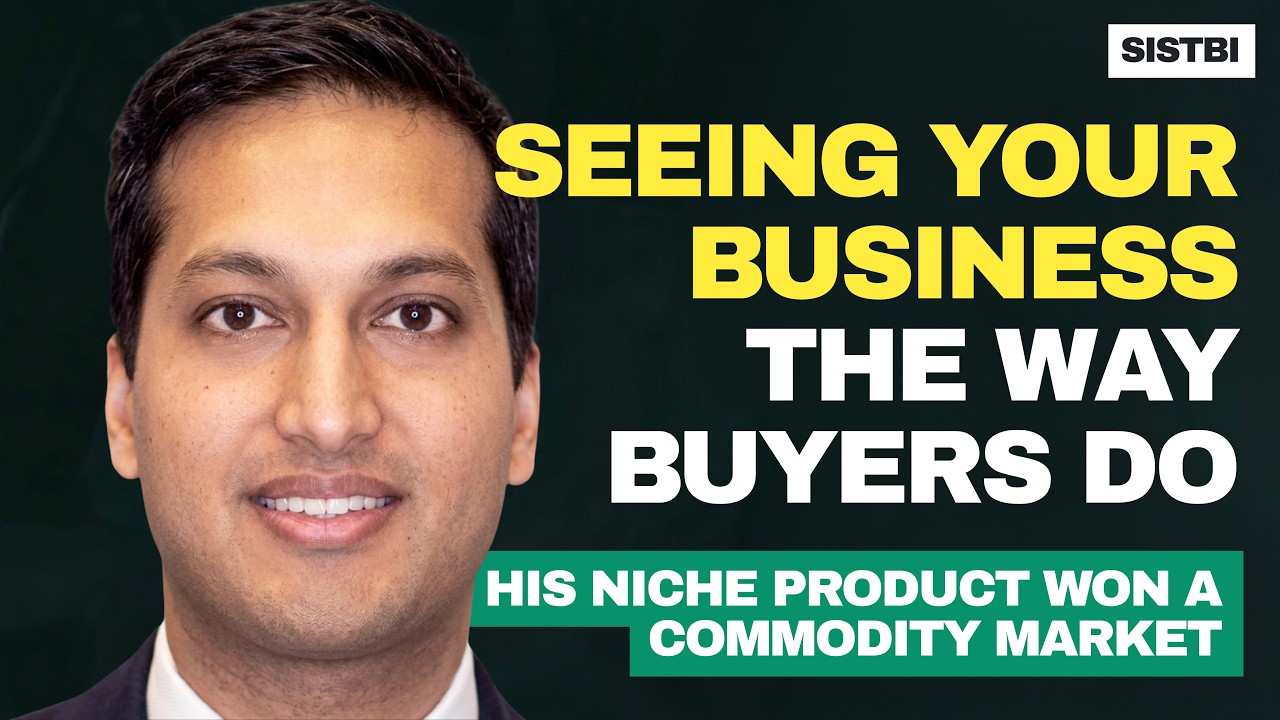
Say It So They Buy ItEpisode 7
Doubling to $10M Without Losing Your A Players
Josh Webber, CEO of Big Red Jelly, joins Mark Gordon on niching down, pricing by close rate, and building a $10M agency with fewer, better people.
About this episode
Josh Webber is the CEO of Big Red Jelly, a Provo, Utah marketing agency with a 35-person team and a big, scary goal: $10 million in annual revenue by 2030.
He spends his days helping clients sharpen their positioning, which makes this conversation unusually honest. What happens when the agency has to follow its own advice?
This episode asks what it really takes to double a services business. Do you go narrow when every client looks like a fit? How do you know if your pricing is wrong? And what kind of team wins once AI changes the math on headcount?
Josh brings an inside look at running and growing an agency, including the uncomfortable admission that defining his own ideal customer is his top priority right now. Mark brings a live GTM scorecard review of Big Red Jelly and the blunt diagnostics he uses with founders who want to grow without adding chaos.
Also in the conversation
- Why you can't deliver Michelin star service with a Cheesecake Factory menu, and what that means for choosing a niche.
- Mark's close rate rule: above 40% means you're underpriced, below 20% means you're too expensive or your sales team isn't doing its job.
- Why tolerating B and C players is the fastest way to lose your A players.
- Winning in the AI era: fewer, better people, paid above market for exceptional work.
In their words
“I always say if you're closing more than 40% of your leads, you're probably not priced high enough. And if you're closing less than 20%, you're either too expensive or your sales team sucks.”
Mark Gordon
“That's one way to lose A players, is by tolerating B and C players.”
Josh Webber
“If you have an average person who's using AI, you're just multiplying your average work.”
Mark Gordon
“Can you deliver Michelin rated service with a Cheesecake Factory menu? I would say no.”
Mark Gordon
Listen here
Questions this episode answers
What is a healthy close rate on inbound leads?
Mark says if you close more than 40% of your leads you are probably priced too low, and if you close under 20% you are either too expensive or your sales team is weak. Somewhere between those two is the target.
Should salespeople do both inbound closing and outbound prospecting?
No. Mark argues people always take the path of least resistance, so hunters should never get inbound leads and lead closers should be paid less because marketing paid to generate those leads. Two separate comp structures create the right economic alignment.
How many leads is Big Red Jelly generating and how does it break down?
About 200 inbound marketing leads a month, roughly half from organic search and SEO, with the rest split between Meta ads, Google Ads, and marketplace sites like Clutch, DesignRush, and The Manifest. The sales team is also expected to source about 200 of their own leads per month.
Why does niching down matter for an agency trying to scale?
Josh says their revenue and profit took off when they were niche, doing only branding and building, and dipped in focus once they added more services. Mark compares it to the Cheesecake Factory versus a Michelin restaurant: you cannot deliver world class work with 60 things on the menu, and a tight niche lets you charge more and build a repeatable process.
Does the setter-closer model work for agencies?
Mark says it works when the setter is good enough to build credibility and hype up the closer before the call. A cheap, low-energy setter becomes the buyer's first impression of your brand and defeats the purpose.
How should an agency shift from project work to recurring revenue?
Mark suggests repackaging projects as contracts, for example selling a website as $2,000 a month over three years instead of $25,000 up front, since websites now need continuous building and AI optimization. He also says to change commission plans so reps are paid to close recurring contracts rather than one-time projects.
Full transcript11,315 words
Mark Gordon: I always say if you're closing more than 40% of your leads, you're probably not priced high enough. And if you're closing less than 20%, you're either too expensive or your sales team sucks.
Josh Webber: That's one way to lose A players is by tolerating B and C players.
Josh Webber: [Intro]
Mark Gordon: Welcome back. We have a very special guest. I know I say that a lot, but I'm really excited about today. And you'll see why when we see the go-to-market scoring for this. We are here with Josh Webber. He is the CEO of a growing agency in Utah called Big Red Jelly. Josh, thank you so much for joining us.
Josh Webber: Thank you, Mark. I'm excited.
Mark Gordon: Awesome, man. So the short version of kind of the journey that you took to get here, and then tell us a little about Big Red Jelly.
Josh Webber: Yeah, short version is, you know, I'm a marketing guy. I've been in agency life my entire professional career, for good or for bad, you know. Very volatile industry. And eight and a half years ago, my co-founder, who's my brother, and I just decided, hey, we want to start our own shop. We thought we could do things better, more efficiently. And yeah, that was in 2017 now. And it's been, like I said, eight and a half years of growing, and we have been growing. Every year we've grown more than the last, with some ups and some downs in terms of growth rate. But we're here now. We're about 35 employees, most of which are in house, which is uncommon. And we work with clients around the world and we're looking to grow.
Mark Gordon: Awesome. I can't wait to dive into all that with you. So is there like some big, hairy, audacious goal for this as you go forward, or is it incremental growth? Is there a destination in mind when you're trying to talk about your growth?
Josh Webber: Yeah, we are an open book agency, so we're pretty transparent with all of our employees about our profit and our revenue goals. And by the year 2030, we want to hit the ten million dollar mark in annual revenue, which is a big scary number. And you know, we can get into the meat and potatoes of it. I don't know yet if we're gonna hit it, but it's gonna require...
Mark Gordon: You don't have a crystal ball? Your crystal ball's broken?
Josh Webber: It's broken. Yeah. That's why you're here. You know what I mean? So yeah, that's our big hairy, audacious, scary goal: by the year 2030, trying to hit that, what is that, eight figure mark, right?
Mark Gordon: Awesome, man. So before we dive into all that, tell me about Big Red Jelly. How did you come up with this name?
Josh Webber: Yeah. Short answer is, again, you know, I've been in agencies for quite some time. Big agencies and small agencies. And especially in big agencies, I learned a lot. You know, I've worked on some big brands, big campaigns, but I always felt like there was a lot of inefficiencies, a lot of kind of ambiguity. Things aren't super transparent. And so when my brother and I started Big Red Jelly, we just knew we wanted to be efficient and transparent. Like that was kind of our ethos. And I'm a big National Geographic guy. And at that point in time I received an email from Nat Geo that they just discovered the red jellyfish off the coast of Japan. This was in 2017. And the jellyfish is the world's most efficient animal in terms of the energy it consumes and puts out. And so redjelly.com was taken by a foodie blogger at the time. Maybe it's available now. So we went with Big Red Jelly, and that's been our mascot ever since. So that's kind of who we are, you know: practical, efficient, transparent agency.
Mark Gordon: That is a way better story than I was expecting. So I really like that. And I'm a huge animal person. Not like in an "I love my dog" kind of way, but I'm fascinated by nature. My Facebook algorithm, all the videos are literally fish and wildlife from all over the world all day long. So that's apparently what I'm into.
Josh Webber: That's a good algorithm. That's a good algorithm.
Mark Gordon: Yes, it's better than my wife's algorithm. I won't get into that.
Mark Gordon: This is very brave, by the way, as a marketing agency, to come on here knowing what we do, because I have to tell you, I have scored marketing agencies before and they've scored in the 20s and 30s out of 100 on our assessment. And where they specialize in web design, by the way, if you do that and you score this way, it's a really bad sign for you. We have not done a ton of these yet. I think you're like number six, but this is the highest score we've seen so far. But we have scored a thousand companies overall, and I'll show you your score in a second, but you guys are right around top 10%.
Josh Webber: Wow.
Mark Gordon: And that's awesome. And by the way, that includes companies like HubSpot and Salesforce that are clearly playing a different sport than you. We don't grade differently based on that. And so I think you guys should be really proud of where you are. So this is a scoring system. I'm gonna go over it very briefly, because if you've listened to other podcasts, you already know. Zero to 100 score. We grade you on 25 categories, zero to four. This score is specifically designed to tell you, when your ideal customer finds you, how easy is it for them to tell what you do, who you do it for, what problem you solve, what's your value proposition. And if I go searching a little bit further, do I find the credibility signals I'm looking for that are gonna make me trust your brand and move forward with you? Average score is 55, but what we find is that companies over 70 grow at two and a half times the rate of companies that are under 60. And if you're under 50, you're kind of completely dependent on founder-led sales or channel sales. You're really not using the internet at all to grow your company. So the first thing I always like to ask, because the rest of this is based on this one statement: this is what our AI is determining your company does. Is this correct?
Josh Webber: Yeah, that's pretty good. Yeah, that's good.
Mark Gordon: I'll read it for anyone listening. Okay. So, "Big Red Jelly is a Provo, Utah-based branding, web design, web development, content strategy, and growth agency. The company uses a brand-build-grow methodology to help businesses clarify their brand, build higher performing websites, integrate digital tools, and improve marketing and sales outcomes." And the reason why that's so important is everything that we're going to grade on the rest of this is based off of that. And by the way, oftentimes I do this for somebody in a sales call and they realize that's wrong. That is what the world thinks you do that doesn't know you, and that's a very powerful thing. It's amazing how many companies you just can't tell what they do and who they do it for. What's very interesting, by the way, and we're gonna pick on you: the one thing I think really stands out to me is that for the score you have, this first category here is usually one that people can get right, even if they get everything else wrong. I'm not saying you got it wrong, by the way, but we do have some feedback on it. ICP visibility. So above the fold, ICP clarity, and by the way, for anyone listening, the score was 75 for Josh, if you're not watching. So above the fold, ICP clarity is generic, with language like "businesses of all shapes, sizes, and industries." So they give you one out of two points on the hero section. And then sitewide, it becomes small businesses, specialized service providers, and many client industries, but does not codify a tight ICP. So let me ask you. First of all, does that feel fair, that you have a generic ICP? And then obviously I'm sure you've thought about this before. I'm sure it's very intentional. Why do you have, at least in terms of your public presence, an industry agnostic approach?
Josh Webber: Yeah. Well, first, you guys are spot on. You know what you're doing. Because I had a podcast not too long ago where I had to confess, you know, as a marketer, and it's almost blasphemy as a marketer, where currently, priority number one is defining who our ICP is and what is our niche. And so the fact you guys are able to pick that up, I mean, big kudos to you. It's a challenge right now that's top of mind for me, you know. It's ironic, because it's what I talk to clients about all the time, right? It's like, who's your ICP? You know, and a lot of times they don't know, or it's too broad. And so that's a current challenge for us right now, is looking at the data and seeing...
Mark Gordon: So I'll say what my experience in this area comes down to, and tell me if you think this is right or wrong for you guys. You're trying to get to this $10 million number. In order to get there, you're like, hey, we need every client. And so the fear is, if I say what we do and who we do it for in a very specific way, somebody who does not fit that exact description might come to our website and click away, or might see us and decide not to work with us. And that feels very scary because you feel like if you miss anybody... You know, so you don't want to say who we're for, because then who we're not for might walk away. Is that accurate?
Josh Webber: It is, yeah. Yeah.
Mark Gordon: So let me ask you this. So this is my explanation of this to people when I have this conversation. And by the way, we are broader than we should be too. So let me say, I understand how difficult this is. We are a little less broad than this, but we are broader than we should be. And I'll share the biggest reason for me is, because I'm still involved in the work at the stage we're at right now a little bit, it would be very uninteresting for me personally to do the same thing over and over again, even if it made us world class at it. And so we do have some real constraints around what we will and won't do, because we do believe we can deliver world class. But also, just to keep it interesting for me selfishly, I'm kind of unwilling to niche down further right now. And we do have other experts in our company that give us that versatility. But we say, do we want to be the Cheesecake Factory? Meaning that everything on our menu is a seven, and we can deliver almost anything you want to eat, 70 different items, and they're the same at all these different places. And we kind of deliver a seven everywhere, which maybe you can do if you're not willing to niche down. Or do we want to be Michelin star? And I don't know if you've ever had the privilege of eating at a Michelin restaurant, but generally it's a prix fixe menu. And the reason is that you cannot deliver world class food and world class service if you have 70 things on your menu. In fact, you almost need to know exactly what you're serving for every single person, at every single dish, every single time, mapped out perfectly to deliver that world-class experience. And by the way, when you deliver world class, yes, you're saying no to lots of people, but you get to charge whatever you want, because you're delivering this world-class service, an experience you cannot get somewhere else because of your specific expertise in this dish, in this area. And so, can you deliver Michelin rated service with a Cheesecake Factory menu? I would say no. And I've done this with marketing agencies where they're a two or three million dollar agency and there are 60 things on the website they say they do. And I say, what are the chances that you're doing 60 of those things well? The answer is zero, right? You can't be good at 60 things. If you're Goldman Sachs, you can't do 60 things well. So as we think about this, I guess, what are the superhero things you guys do now? Where is your best work, both in terms of what you do for clients, and which clients are you finding that you do the best work for?
Josh Webber: Yeah. Well, first of all, this is such an interesting conversation. Our core message for the quarter is Michelin Star. So the fact that you bring that...
Mark Gordon: Okay. We're crushing it. We're on target.
Josh Webber: Yeah. First, I a hundred percent agree. And what's interesting is, and I think a lot of business owners will sympathize with this, there were a couple constraints that happened through the last eight years. So we used to be more niche. And I think a lot of people have probably made the mistake that I'm currently in. Not that it's a mistake, but we're intentionally trying to re-niche again, right? So to your point, we're trying to do that. But for the first seven years, we were more niche, in that we just did branding and building. So we evangelized to companies, and one could argue that's still not niche enough, but we did all the stuff that you should do before marketing and advertising. That was kind of what we preached. And our website reflected that. Our sales funnel reflected that. Like, we were really good at projects. And then to your other point, we had strategic partners who did all the other stuff: SEO, GEO, advertising. And you can see our profit and revenue when we decided to do that, it just took off, you know, because we were niche. And so it supported that theory. And then again, it was kind of a mistake, kind of not, but we just had so many project clients toward the end of working with us, it came via popular demand. They said, hey, we want to keep working with you. And so then we rolled out our Grow service. And I still think that's the plan, but I think I rolled out too much. And so to your point, it was trying to be too many things to too many people. And so right now what I'm looking at is, okay, do we want to go more industry specific? I think that's a niche, right? Or the other niche is, let's just focus on a few services and do them ten out of ten, to your point, or seven out of ten, eight out of ten, nine out of ten. And so that's the challenge I'm at right now. And I agree, you know, the case studies don't lie. When you choose a niche and you're world class at it, you do have to say no a lot more, but you're gonna make more money and make more profit, most likely.
Mark Gordon: And you can be more targeted in your marketing, right? You know, I'll tell you, one of the fastest growing companies I've seen is a company that specializes in SEO for blue-collar businesses, local SEO for blue-collar businesses. And it went from basically zero to 700 clients paying monthly in a relatively short period. And it was because their messaging was very fixed, their distribution of messaging was very targeted. They were able to, because they had this very specific focus, it was a repeatable process. They could hire a team and train a team to do it over and over and over again. And then they just stayed in their lane. And then you get 700 clients paying you $3,500, $4,000 a month on average, for whatever it is. You're hitting really big numbers really quickly, and you're not really running that complicated of a business. It's very scalable, right? But it's hard, right? And it's hard because, is that what you want to do? How interesting do you want to make it? What do you enjoy doing? And so these are all the things we run into as business owners. The good news is the rest of what you guys are doing here is really great. The problems you solve are pretty locked in. Value proposition sharpness is good. Position consistency is good. And there's a lot of outcome proof. I will say though, most companies, if they're going to have a high score for us, this is their highest score. For you, it might actually be your biggest area of opportunity, clarity of market fit. Demand visibility is where you're doing great, where most companies really struggle. In fact, I have another company I did earlier today. They had a 17 for clarity of market fit and a four for demand visibility. Okay, so in other words, you can know exactly who you are and what you do, but if no one ever sees it, it doesn't really matter, right? You guys are doing a great job with this part. So SEO, four out of four. Content presence, four out of four. Narrative founder reach, three out of four. Reputation signals, four out of four. And buyer education path, top of funnel on the website, three out of four. And by the way, reputation signals four out of four is not an easy thing to do as a relatively small agency. So I give you guys a lot of credit for getting not only a lot of reviews, but across multiple platforms and multiple areas. Something that companies really struggle with at this stage, you guys are doing a great job. How have you been able to execute the strategy on that?
Josh Webber: I think it's one big thing. I'm a big process guy. I think it's just embedding asking for reviews, client happiness, client experience into your process. You know what I mean? It's usually the number one indicator. Like, I bump into a lot of businesses, they do great work, but they haven't drawn out their client experience or customer journey on a whiteboard. It's like, where in this journey do you ask for a review or a testimonial or a case study? And they just...
Mark Gordon: So where do you? What's the answer?
Josh Webber: Several points throughout the journey, you know. And that's the other thing too. You don't have to wait until the very end. It can be at the beginning, it can be in the middle, it can be at the end. You know what I mean?
Mark Gordon: Yeah. Awesome. I love it. Conversion infrastructure on the website, again, really great score, 15 out of 20 overall. The only thing that we really picked up on as an opportunity was your automated follow-up path, potentially. So when someone comes there to put their information in, how much automation do we have in that follow-up path? What kind of personalization is there? Sales readiness score, again, really good, 16 out of 20. This one area here, objection handling signals, and this has become more and more important, we've seen, especially for AEO and GEO, which is having a frequently asked questions section that specifically talks about what you do, what you don't do, and where those objections are. The LLMs are picking up on that, and they're using this as a real filter for when to recommend you or not recommend you. And so for our clients, we've really pushed them in that one area to focus on that. Technical go-to-market enablement, weakest section overall, 12 out of 20. And you tell me if you think this aligns, but call it buyer signal responsiveness. It says here the site provides multiple engagement paths, including quote requests, free audits, downloadable resources, newsletter sign up and schedule prompts, but there's no clear evidence of dynamic personalization, chat, or sophisticated segment journeys. Automation and CRM signals are kind of there, but there's some opportunity for advancement, and then tech stack depth. Do those ring true?
Josh Webber: I would say yes. Yeah.
Mark Gordon: Awesome. Very cool. All right. Very nice. But 75 out of 100. Like I said, this is an elite score, especially for a small agency. When we do just our generative SEO score, 70. Again, this is an elite score. Anything in the high 60s, 70 is amazing. Two areas they pointed out specifically for AEO and GEO opportunity. One was structured data and schema. The content uses clear headings, numbered processes, service-level testimonials, and clear navigation, but the provided crawl does not show explicit schema markup. In other words, you don't have pages built specifically for the AI to come and see them and scan them easily, which is something that you can do very easily. Throw some Claude Code in there and throw it in the back. And then some citation worthiness stuff here as well. In other words, you guys are claiming some different things for different companies. How do you cite those things? So I will send you the report, obviously. But when you look at this, how does it make you feel? Do you think it's exciting? Do you feel like you're doing a really good job? Are you annoyed that there's anything that's not perfect? What's your personality type?
Josh Webber: Well, I always have, yeah. My co-founder knows this well. Same with my team members. I'm never satisfied. But I am happy to hear that, hey, we got a good score. I was nervous at first. I was like, dear, you know, here we go. So I've got to give some kudos to some of our team members. But then yeah, I am a big fan of, okay, these areas that are in yellow, let's rock and roll. What can we do to fix these? You know.
Mark Gordon: I think what you'll find is that there's probably some quick fixes that can get you in the 80s. And by the way, less than five percent of companies we've ever run get to 80. And so you're close to the elite, elite territory. And I think it shows that you're obviously experts in this, and that's why your clients should trust you in doing it for them as well. So let's talk about the growth goals. What are you guys doing right now to generate new business?
Josh Webber: Ooh. We've got a lot of different strategies going on. We've always been really aggressive with our sales and marketing spend. I would say more so than the average agency, and that's intentional.
Mark Gordon: Where are you spending?
Josh Webber: Our budget is twenty percent of our revenue that we allocate toward marketing and sales.
Mark Gordon: Yeah. We're 25%. We believe in it too. And I would say that other five percent is what we call experimental marketing, meaning that we're always working on two or three things we're not sure are gonna work, and we're okay with that. And then we have our bread and butter investments in terms of what we do for marketing. But are you doing it on ads? Is it cold email? Is it LinkedIn? How are you bringing in business?
Josh Webber: So we get about, I'll give you some numbers. I'm genuinely curious your feedback, because I'm trying to get to that next level. And I think we do have to make some changes, because what got us to where we are now isn't gonna work to get us to ten million. I think that's a fair assumption. So we get about two hundred marketing leads a month, inbound. About half of them are from organic search, SEO, GEO. The other 100 are split equally between Meta ads, Google Ads, and marketplace ads. So Clutch.co, DesignRush, The Manifest, those sorts of things. And that's why it was so important for us to have a lot of reviews on there and just look really sharp, because if we're gonna invest in ads, that's what they're gonna look at first before going to the website. So that's our marketing side, and then we have a pretty robust sales team. I always have. Right now we've got five sales guys. And that's probably challenge number one. I've got two that have been with me for a while, they're consistent, they're killers. Right? I've got one that's been with me for a little bit of time, and we're getting there. And I just brought on two more, and jury's still out. You know, the math has to make sense for them to exist.
Mark Gordon: So this is an interesting part of the conversation, because I'm a sales guy first, marketing later. You're a marketing guy first, sales later. So let's kind of walk through it. Because I would say that at your size, in my opinion, from 30,000 feet, I just met you five minutes ago, you probably don't need five sales guys. So walk me through it. Are those guys just working your leads? Are they doing outbound? And actually, before we start there, what is your average monthly revenue per customer?
Josh Webber: Yeah, great question. Right now it probably sits at around 5K.
Mark Gordon: Okay, awesome. So $60,000 a year. That's a really great number. It gives you a lot of room to play with. So tell me about your sales team in terms of that. You have these 200 leads that are coming in. How many of them are qualified? What does that process look like? And do you have specific people working the leads and then hunters, or are they supposed to be doing both? Tell me about it.
Josh Webber: Yeah, that's what I am currently exploring, and so I'm really curious about your expertise here. For the first five years, I had two or three sales guys, and they were full cycle, and right now they're technically still full cycle. So they are required to go and do strategic prospecting, bring in their own SQLs, et cetera, and we have quotas for that. And so right now the threshold is about 200 MQLs per month, and I expect about 200 SQLs from their efforts per month. The SQLs are very nice, as you know. They tend to be more warm: strategic partners, referrals, return clients, repeat clients, networking groups, they go to expos. So we've got these two groups, about 200 MQLs, 200 SQLs, about 400 leads per month that we're working with. And all of those leads go to the five biz dev guys right now. And one of the problems I'm having right now is the MQL qualified rate is definitely too low. If I was to guess, it's maybe sitting at around 15 to 20 percent of the MQLs that are actually, you know, legitimately qualified. So that chops out a lot of them right there. And that's probably priority number one for me, increasing the volume of MQLs and the qualified rate. That's the big challenge. And then challenge number two, to your point, is something I'm thinking about. Five biz dev guys, I accept that it's too many. Part of it is a little bit HR-wise, because I've got two that are high performing, and I've got one that's been on the fence now for a while. And so I've got these two with the intention of, well, this one might not work out, replace, and then I've got four that I'm working with. So anyway, that gives you a little bit of context.
Mark Gordon: Well, without getting into churn and everything else, let's just say, how many new five thousand dollar a month clients are you trying to bring in each month?
Josh Webber: Yeah, let me do some quick math, because each biz dev person should be bringing in about four or five.
Mark Gordon: Okay. Well, so let's walk through this. So each of those guys is supposed to be bringing in two and a half million dollars a year in new business.
Josh Webber: 'Cause it's about sixty thousand per contract, right?
Mark Gordon: Yep. And if I'm bringing in four contracts a month, that's two hundred and forty thousand. And if I'm doing that over 12 months, it's like three million a year. So I don't know that that adds up with your growth goals at those numbers. Unless we're replacing people on it, or unless you're counting repeat customers.
Josh Webber: Yeah, I think the thing to keep in mind too is we pivoted to our Grow service about a year ago. And that's the other challenge. A lot of the deals they close are gonna be one-time projects. And I would say when they do Grow, the average monthly is about five thousand. Our lowest tier is twenty five hundred, and there's some fifteen hundred dollar a month. We do get some enterprise deals that are bigger. Maybe the number to share that's more helpful, and I'm curious your feedback on this: the quota for a full time biz dev person right now is forty thousand dollars in new revenue per month. And that's whether in projects or the first month of Grow contracts, if that makes sense.
Mark Gordon: Yeah, so I don't think you can look at those the same way at all. Project-based work is very specific, but it's one time. But the value of a $5,000 a month recurring revenue client, let's just talk about that for a second. So we're talking about selling the company, enterprise value, what marketing agencies are worth. Are you willing to share what you think your profit margin, or gross profit, not even net profit, is on a new client? A new recurring revenue client. So if I'm getting $5,000 a month, what's my gross profit on that five thousand a month?
Josh Webber: I'll tell you the net profit is about twenty to twenty five percent.
Mark Gordon: Cool. Okay. So for EBITDA, then we're talking about, let's call it an extra $15,000 a year per new client that comes in. So that person is building at least $60,000 in enterprise value when we bring that on, as we think about that. So then on project based work, if somebody brings in a project for $20,000 one time, that doesn't really compare in the same way, in terms of different profit margins and everything else. Are all five of your salespeople responsible for bringing in both types of projects?
Josh Webber: No, and that's what's tough, right? Because my experienced guys, they'll exceed quota, but they're currently learning. It's a different skill set, as you probably know. Closing these annual contracts is different from closing a one-time website project. And so that's what I'm currently in, and I kind of do it in phases. Number one priority is just new revenue. What's your quota for the month? But they're slowly getting better at it, and I changed my commission policy to reflect that, so there's the incentive for them to close these contracts instead of the one-time projects. They're slowly starting to close more of these annual contracts, but we're still a little too addicted to the projects, because we did that for five years. You know what I mean?
Mark Gordon: Yeah, I think you need to change compensation plans to reflect that. You know, follow the incentives, you'll follow the behavior. But yeah, so you're moving from a project-based marketing agency to a recurring revenue-based marketing agency. So the first thing is, can you convert project revenue into recurring revenue, even in terms of just the way you sell it? Right. So instead of building a website for somebody where you say, hey, you give us 25 grand up front, say actually it's a three-year contract of $2,000 a month for us to build and maintain your website. And they say, well, why would you do that? It's like, well, in our experience, website and technology is changing all the time. We need to optimize for AI. It's not really a one-time build anymore. It's a continuous build. And so we're gonna do it in this way. And then by the way, what other services can we stack onto that so that you see it as more value, right? What are the things that we can do for your organization? So I think there's a packaging piece of it, in terms of how you psychologically cross that bridge. But I do think website as a service is gonna be a very real thing as we adopt the world of AI. I don't know that people are selling it that way yet, but we certainly do in terms of our stuff, because I have a page on my website going up literally every day. I mean every day, because we have our podcast episodes that are going up there. We have the podcasts that I'm on up there every day. We have different social media things go up there. We have blogs. Every day we're adding content to the back end of our website. So it's not a one-time project anymore, right? It's a continuous build if you want to stay on top of it and you want people to find you.
Josh Webber: Hundred percent, yeah.
Mark Gordon: So that's one thing. But then, is everyone getting the leads that come in, or how are you distributing leads that come in from the website?
Josh Webber: Yeah, there's a few filters. It depends on experience. If they're a new biz dev team member, they don't get assigned inbound leads, right? They go and prospect, and you kind of earn that. You work through the trenches for the first month. The second month they start to get some inbound leads. And then I've got some criteria based on the size of the client. If it's one of the bigger ones, it's gonna go to one of the top closers. If it's an industry, they have certain strengths in certain industries. It's not perfect, but I think it's getting there.
Mark Gordon: Do you pay the same amount on a marketing lead versus a sales lead?
Josh Webber: Thought about that. As of right now, yes. Yes.
Mark Gordon: You're teaching them to be lazy. And then, you know, by the way, I'm busting chops, because these are all hard decisions and it's hard to get these things right.
Josh Webber: No, I 100% agree.
Josh Webber: If I can ask you, I love this because I want your expertise. So given what you know about us, we're an agency with about 35 employees, like I said. We're on track to do about five million in revenue. And we've got five biz dev guys, but keep in mind that some of it's intentional. I'm playing with the idea of three to four. And we're getting about two hundred inbound leads, and I expect them to go and get a hundred to two hundred of their own leads every month. If you were me, what would you suggest changing, improving?
Mark Gordon: So I fundamentally believe in the world of AI that the companies that remember what I'm about to say right now are gonna be the ones that succeed. And this has always been true, but it's more true today than ever. Fewer, better people, paid above market, for exceptional work. So if you have 35 people over there, my guess is average compensation is probably not falling into what I would consider fewer, better people, paid above market, for exceptional work. Maybe some of them are overseas, whatever. We can get into that in a separate conversation. And so I would take whatever money I'm planning on investing in salespeople three, four, and five, and I would dump it into marketing. And then I would have my two sales guys become world class at leads. And I would abandon prospecting, unless I was having so much success with the sales-driven leads. I would reinvest in marketing. I would have killers on the phone that were sitting at a desk all day taking those leads in, driving revenue in. And then I would build out my sales process, my follow-up process, in a way where I'm not investing time going to conferences, or doing this thing and that thing, and I don't have all these different focuses. It's like, no, I have eleven 30-minute meetings today in my calendar. I have a sales process I do over and over and over again. And I'm gonna convert these things, and I can build, measure, learn from there. And I want elite salespeople making an obscene amount of money to generate crazy amounts of revenue. I wanna be able to go attract the best salespeople in the world. I'm gonna say, hey, listen, sit at this desk. We're gonna give you world-class leads. And by the way, maybe I have an SDR overseas who's doing a pre-screen call to make sure that it's not even getting on my calendar unless this person's serious. So I'm being very protective of these top sales guys and their time. But then I want them to be absolute savages, and killers in there. And then even with your team, right? AI can do so much now if you have a really smart person who's really talented and can extrapolate themselves. But if you have an average person who's using AI, you're just multiplying your average work. If I have a world-class person using AI, I'm five times as productive as I was five years ago, right? With what I can do with AI. So I want those people in my organization. And so we've gone to a model where we have expensive people who are expected to do a lot of work, and to build systems, and to do all the different things. But I want winners in every seat, right? And that's kind of how we think about it. And then it makes it easy to not tolerate that mediocre performer, where you're like, I hope it works out. It's like, no. No one wants to work with B and C players. We're an organization of A players. You get three months to prove you're an A player. You get three months with coaching to prove that you can change it around. If I don't see radical growth over that first six months, we'll help you get your next job. No hard feelings. Right. And so, you know, we like you, great, we can have beers together, you just can't work here. And so that's kind of how I think about it. And by the way, I tell everybody that in the interview. There are much easier places to work. You don't come here because you're looking for easy. You come here because you're looking to work with A players, do the best work of your life, learn a lot, get paid really well, and feel all the stress and pressure and responsibility that comes with that. And if that sounds exciting to you, come on board, check it out. Right. And it's in our job description, it's in our interview process, and we scare away the people that aren't ready for it.
Josh Webber: Wow. I like that. If I may, can I ask you some questions to dig deeper?
Mark Gordon: Let's do it.
Josh Webber: One thing I've been torn with is, so I agree with that. I think that's where I need to go, what you're getting at, is the Michelin star thing. Fewer people, better people. And I know this in my heart of hearts. It's like, you want A players, and you know who the A players are and who aren't.
Mark Gordon: So does your team, by the way. They see what you're tolerating. They see what you're willing to tolerate.
Josh Webber: Yeah, exactly. I was just gonna say, that's one way to lose A players, is by tolerating B and C players. What's your opinion on, in working with agencies, healthy quotas, right? Like, I've done some research, and there's different people with different thoughts. It's like, well, a world class salesperson in B2B should be bringing in seven X of their take home pay, or five X, or ten X. Do you have any guidance on what a good quota is?
Mark Gordon: That's a strain. I think that says more about the company than the salesperson. Let me just say it that way. It would have been much easier, I've been a pretty successful sales trainer for a very long time. The reason why I don't operate a sales training agency is because I believe that how good your sales team is, is actually much less of the piece of what makes a company successful than other people think. If you want your sales team to overperform, it comes from alignment of your Core Four. So that's messaging and product market fit: we know what we do, we know who we do it for, we're consistent about it, the messaging is there. Lead generation: how do we distribute that messaging so we can get people to raise their hand and say I'm interested? Sales execution, which is that once someone's interested, we can get them over the finish line. But I'll just share with you, the difference between an average salesperson and a great salesperson is maybe 30 to 50% difference in terms of conversion rate. It's not 200%, 300% difference, right? And then revenue technology, right? To support all that as we go forward. And so that's why we do all Core Four when we come in. It's like, I've hired three vice presidents of sales in a row and they all sucked. It's like, well, actually, they were all top performers before they got there, and they all left and became top performers somewhere else. It's you, right? So when you think about the quota thing, that's all part of it, right? It's okay, how good are the leads that are coming in? Are they closing them at the percentage that we think they should be? And by the way, I always say if you're closing more than 40% of your leads, you're probably not priced high enough. And if you're closing less than 20%, you're either too expensive or your sales team sucks. Right. So you should be somewhere in there as you go forward. And then really the quota becomes about, okay, in a market-driven approach, how much do I have to offer in compensation to attract a really good salesperson? And then am I giving them enough opportunities and at bats, and is my product expensive enough? Are we delivering a quality enough product to take advantage of that top salesperson? So, in other words, in fact, we just talked about this today with one of my companies that I own, which was like, hey, we're gonna raise our prices. We think our product is good enough now, we're gonna raise our prices. And I'm like, cool, just so you know, when you succeed with that, that's putting more pressure on your operations. I said that in front of the whole operations team, because you now have to deliver a product that's worth that price. People might have thought they were getting a deal from you at four grand a month. At eight grand a month, they're gonna think you suck, and you're delivering the exact same stuff. And so are you ready for that, right? And so for your sales guys, it's like, okay, if they're only delivering five X of their salary in quota, but they're crushing it on the phone and they're killing every deal that comes in, but they don't have enough leads, or the product, cool, that's worth it, right? And by the way, you talked about customer acquisition cost, right? Is it 20% on marketing and sales? Is that the right number for you? On a project basis, it's tough, but you can do it. We're 25%, and a lot of our work is kind of project based too, but we're charging big revenue up front, so it's a little different of a process. But okay, cool, what is my total combined marketing and sales cost? And I might say to my sales team, hey, if you go out and find your own leads, we'll give you all the comp. By the way, if it's a marketing lead, we pay you less, because we had to spend that percentage on generating the leads. And I'll ask you, do you want to go hunt, or do you want to sit here and answer? And by the way, we have different guys for different things. If you're a hunter, you don't get leads. Go find your stuff. We'll pay you very differently, right? If you're gonna be the lead guy, cool. And by the way, you can do that job remote, you can do it from home, it's comfortable. You can go do it from France for the summer. I don't care. You get less though, because I paid for those leads. Right. And just having very clear lines there. And by the way, I'll just say this: if you let somebody be a hunter and a farmer, even if they are money motivated, well-intentioned, super smart, they will always take the path of least resistance, because we're all still human. I see so many sales guys spend time organizing their CRM every day. And that's because there's no rejection in organizing the CRM. Calling people, cold calling, going out in the world, facing that social rejection, that's a hard thing to do. And so when you have a salesperson that needs to do that, you can't let them do anything else, right? Their entire ego needs to be about going and being willing to go get their face kicked in and bring in new business. Right. And if you give them anything else, if you start giving them leads, it's like, cool, that's easier. I'd rather do that. Of course they would. Right.
Josh Webber: Yeah. I love this. So I'm torn between... right now they're full cycle, right? They've got marketing leads and their own leads.
Mark Gordon: So in other words, right now they're kind of everything.
Josh Webber: They're kind of everything, and that's problematic. They're not niche, you know what I mean? And one of my apprehensions is, marketing ebbs and flows, right? I've seen it. As you know, Google will come out with an algorithm update, and all of a sudden our SEO leads take a major dive, right? Or I don't know, we mess up our ads. And that puts a certain fear in me. And so I want them to have that ability to control their own destiny: do strategic prospecting, account based selling, et cetera. And I know it's not optimal, but I'm torn between these two paths, where it's like, I want them to have that skill so they can, in theory, go and close deals on their own and pretend that marketing doesn't even exist, but marketing's there just in case, if that makes sense. Or vice versa.
Mark Gordon: Yeah, I think it's solvable, right? So what I'd do is, if someone's a marketing lead person and they're on a marketing lead compensation plan, but they go bring in their friend or family for business, I'll pay them like it's an outside lead. And if we get slow, go ahead, toss a phone call. I'm not gonna get in your way. You can work outside the leads if we're slow on leads, and I'll even pay you more if you go do that. But your primary job is making sure that we're getting our money's worth on every lead. And by the way, if I find out you're not calling leads because you're calling your friend to bring in business, you're out of here. I'll take you off leads in a second. Your outside guys are never allowed to get leads. I don't care if leads start falling out of the sky. It's raining leads. They're not getting called. You're inundated? You get on the phone and start calling them. Your outside guy is not allowed to do it. Because if you do that, he'll stop being the outside guy. And so I think that's kind of sacred. You want the big comp, you want the big responsibility, you want to go to the conferences, you want to build the relationships, you wanna be left alone. By the way, I don't know where you are, I don't care what hours you work, you deliver results, and that's it. Cool, freedom and responsibility, but you're not getting my leads. If you're my lead guy, you're in the chair from eight o'clock in the morning till six o'clock at night. You're getting every call. You're following the process. You're logging the CRM. Maybe we're incentivizing you differently on those leads. And then yes, of course, if you bring in some extra business, great. And by the way, this is the same thing we did in the mortgage industry. You have your call center guys and your outside guys. Your outside guys never get leads. Your call center guy, if their friend or family wants a loan, we'll pay you on it. Cool, no problem. Different, right? So I think that's kind of how you segment it.
Josh Webber: So from what I'm taking away, the first step is to create that economic alignment. There need to be two different comp structures.
Mark Gordon: Hell yes.
Josh Webber: Yeah, there's the MQL lead closer guy, then there's the out-in-the-woods guy. But the call center closer guy can by all means go and bring in their own. I'm not gonna stop them, and they get compensated accordingly for that, but they should be prioritizing the inbound leads.
Mark Gordon: Well, they're going to naturally prioritize the inbound leads because it's easier, because somebody already raised their hand, so they want to talk to you, right? It's just an easier thing. And you probably want to find somebody who loves that call center lifestyle, right? Who doesn't want to go hit the pavement, and they like that they have the flexibility to go grab their kids from the bus stop and then hop back on the phone, or whatever, right? It's a whole different animal. But what I would say is, the math just maths on this too, right? If you're gonna spend X amount of dollars on marketing every month to generate those leads, that has to be factored into your customer acquisition costs. And so you have to pay less on that, or you're having a perverse incentive structure, and you're gonna get perverse results.
Josh Webber: Yeah. What's your opinion on the setter-closer model, right? Having a team of appointment setters and then closers. And the reason I ask is I've tried it before with mixed results, and I kind of come back to what you said earlier, which is, is this spend just better in ads? You know what I mean?
Mark Gordon: I think there is a lot of validity to the model if you run it very clean, very tight. I think when done well, it's the right way. I think most people don't do it well, and then they get frustrated, and it ends up being an extra spend. And you now have a weak salesperson being the first line in your organization that someone's talking to, and that affects the credibility of your sales process. I think if you can find a good salesperson to qualify leads, you have a very tight process with very tight inspections, and it actually does both: save your killers time, and prepare better, because someone gets them hyped up to talk to this person. "You want to do X, Y, and Z? I'm gonna connect you with Josh. Josh is the number one expert on this in the world. I can't wait for you to talk to him. Let me see if I can squeeze you into his calendar at 3:30 tomorrow. Okay, I think I can move this around. I'm gonna do it. By the way, if for any reason you can't make it, you gotta let me know, because Josh's time is precious. I can't wait for you to talk about this. When you hear what he's gonna talk to you about your website, you're gonna have your mind blown." Now we're hyping this guy up. We have this appointment setter. This guy's fired up. Josh comes in, it's like, yo, what's up? And they're like, my God, I'm so excited to talk to Josh. So that's where I think it works. If it's somebody that's like, "Hey, so did you apply for the thing? Okay, cool. Are you gonna show up?" it's like, what am I doing here? Right. In that person's head, listening to that, your company is whatever that person sounds like.
Josh Webber: Yeah, it affects the brand for sure.
Mark Gordon: So you have to be very protective of that, right? And so, the woman who did, did you get a phone call before this meeting to set this up? What was your experience like? Was it great?
Josh Webber: I did, yes. It's great. And text messages. She was nice. She was excited. Good energy.
Mark Gordon: So did you know she lives in Lebanon? Would you have ever guessed that?
Josh Webber: Wow. I would not. Yeah.
Mark Gordon: She almost has a British accent, if anything, right? So my point is, that was your first impression coming into this, right? If that would have been crap, you would have been dreading this meeting all day long. You'd have been like, what did I get myself into? But you talk to her and it's like, dude, this might be exciting. These guys have their shit together. So if you do it right, yes. Right. So Marina, I think, is an advocate. She changes our sales process, because if you talk to her, you're like, wow, they have that person at that level just making sure I show up. Okay, cool. What's going on here? Right. And then that's the Michelin part of it, right? It's like, what does the host or hostess look like? How are they dressed? How do they talk to me? How do they make me feel? When I walk in, do they already know who I am? When you're at a real Michelin restaurant, that person looked you up on Instagram from the reservation. When you walk in, they're like, "Mr. Gordon," and you're like, "Damn, I'm in the right place." How can you give that sort of an experience to somebody? Then yes, I believe in appointment setters there. If you're like, cool, I'm gonna have the cheapest person I can find for eleven hundred dollars a month in the Philippines, just being like, "Hello," and by the way, their internet's bad and it's broken up, I think it really defeats the purpose.
Josh Webber: So let me ask a last question. I don't know if we have time. Do we have time?
Mark Gordon: I got nowhere to be. It's the weekend. We're here, right? It's my last meeting of the week.
Josh Webber: Yeah, three-day weekend. So this is awesome. Let me say, okay, let's pretend this is gonna be my strategy given what you said, and this is what I'm leaning toward now, and poke holes in it. So, 2027 Big Red Jelly. I want to have three killer closers. Less, but absolutely killer. I think I've got two of them, you know, and I need to find a third. Or maybe not, maybe it's just two. But let's just assume three killer closers. And I don't want to keep playing around with appointment setting or more salespeople. I want to invest that budget into really good lead generation. And to your point on the report, which I thought was interesting because I agree, our sales tech stack can be improved: our automations, our text follow-ups, email follow-ups, reducing no shows. So my strategy would be three killer closers, they are in-house, marketing lead closers. They're getting two, three, four, five, six, seven calls a day. And I'm going all in on lead gen, and their job is to close. And then I give them the caveat of, yeah, sure, you can bring in your own leads, you get paid a little bit more, but your priority is the inbound leads. And that's the new, refined Michelin star strategy.
Mark Gordon: Yeah, I think so for sure. Especially because you guys are selling all over the world, right? It's a really hard thing to go build your own book doing that, right? At some point, if I'm gonna just be randomly cold calling, I'm gonna have AI making those calls at this point, right? You can do that outreach that way. But yes, I'm investing in lead generation a hundred percent. And I think you can make it consistent if you do it across multiple channels, right? If you're relying on Meta's algorithm to stay the same, we know that that's a losing fight. Everybody's been down that road over the last 15 years. But if you're doing Meta and Google and SEO and cold email and LinkedIn outreach, and one channel gets a little slow on you, right? You pick it up, you move somewhere else, you change spend, you figure it out. No big deal. It just becomes, something's always not going to be working if you're doing all the things. And then you continue to dial in on those different ways. And then also, how do you package your sales packages for those guys so they generate more recurring revenue? Because then you can continue to invest a little bit more, even in what we call customer acquisition costs, because next year you have recurring revenue that costs you zero in customer acquisition costs, right? Moving towards that, I think it changes the economics of what you're talking about.
Josh Webber: Hundred percent. Yeah. And I guess coming back to, before any of that, dialing in the ICP and niching down first, then rolling out those changes and seeing how we do.
Mark Gordon: Yeah. At least what I would have would be landing pages that were industry or product specific, and leads that were driving people back to those pages. Because what you really want is that when somebody hits that page, for them to have this serendipitous moment of, I'm so glad I found these guys. They specialize in what I do and the problem I have. And if it takes people time to figure that out, they're already gone. Right. When you come to our website, it's like, okay, do I need to build up my sales engine in 120 days? Is that my problem right now? And if it's not, you're gonna leave. And if it is, you're gonna be like, yeah, I think that's amazing, I want to talk to those guys. And that's kind of the point, right? So just try to dial it in a way where it's very specific. And you know, we have multiple companies we own so that we don't mess with the IGTMS brand, because there are things that we do that are kind of agency related. We have a cold email agency, but they don't sell under the IGTMS brand. They have their own name and their own thing and their own website and their own landing page, because that has to be something separate. Cold email is a lower cost thing that you will sell to almost anybody. We're very picky about who we take on as a client at IGTMS. Cold email is like, if you want to try it, try it. But if I get a bad review, I don't want that to hurt the core brand of my consulting company. So as you think about those different things going forward, it's sometimes okay to have multiple brands, or at least multiple pages doing different things for you. Yeah?
Josh Webber: Yeah. I like that. We're pretty diversified in our lead gen strategies, like I mentioned, right? It's relatively new for us to be running B2B Meta ads. We started a couple months ago. And you just talked about it. Do you have any strong opinions on which lead gen channels are best right now for a company of our size?
Mark Gordon: Best is a very weird thing, right? And so, Meta's great because it's infinitely scalable. And if you can make the numbers work, you can just keep going. It's also incredibly competitive, right? You see it in your feed, right? It's like, I looked at a pair of pants, and now every pant company on the internet is in my Instagram feed, right? So it's very competitive. You have to break through. And intent, I think, is kind of low, meaning that I can have a couple of drinks at 11:30 at night and just go, yeah, of course I want pants. And it's like, what happened? Right. Same thing with your marketing agency. Cold email, we find the response rates are very low, but when someone responds, their intent is extremely high. No one's responding to a cold email unless they have the specific problem. And if you can get your offer right in a cold email, you can get really great response rates and drive things there. And so I think it's really just continuing to build and measure what's working, and then understand where you want to invest in what I call the scalable resources, so that if you want to grow, if things get tight somewhere else, I can always dump more money in and keep going there. There's only so many cold emails I can send. That's not gonna feed my business to a hundred million, right? So I have to have these other channels. But I think you wanna just sprinkle it around and really build, measure, learn. But I'll also share that a lot of it comes down to the offer and the creative, in terms of those conversions. And so how can you make what you do compelling enough? And really, the thing about Meta is you almost have to have a guarantee now to get somebody to click on the thing. But by the way, most of the time when they get to you, they don't even remember the guarantee, or the product you're selling changes anyway. So can your guys sell around some of that? And that's kind of, unfortunately, the game you have to play today.
Josh Webber: Yeah. Well said. I like it.
Mark Gordon: Well, Josh, I think we've gone way over. Thank you. I appreciate that.
Josh Webber: I see why you're a sales guy. I was gonna say, you're good, you know. You're good.
Mark Gordon: Some people might take offense to that. Not me. I'm pumped about it.
Josh Webber: No, I think I've evolved. I started as a marketer, but you know, as a small business owner and entrepreneur, I think you gotta walk the walk, and I fell in love with sales really quickly, you know what I mean? It's probably my favorite part of any day, a pitch or a discovery call or getting to have these sorts of conversations. And so anyway, sales comes before marketing in some ways.
Mark Gordon: I think if you're not enjoying sales, it's the way you're approaching it. We talk about this all the time. First of all, you have to believe in your product. And then you have to believe in your product for the person you're talking to, meaning that if I talk to you and you're not a fit for what we do, I tell you right away. And I'm not gonna try to convince you. If I notice that you have a problem that we can solve, I'm gonna bring all of my passion and energy to that, the same way I would if I was a cancer doctor and you came in with cancer, and I think the best way for you to get healed is the surgery. And you're like, I'm not having surgery. It's like, well, my job is kind of to convince you that you're gonna have the best survival rate if you have the surgery, right? Same thing here. If you have this problem, I can see it in your business, and you're like, yeah, I don't know if we're ready for that, we can't afford it. It's like, can you afford not to do it? That's a real question. What does that look like? And so for me, when I'm selling something I believe in to a person that has the problem I solve, it's wonderful. And so how can you, from a marketing perspective, attract those people, so you're having more of those conversations? And then how quickly can you tell somebody, give them your best advice, and tell them, hey, listen, here's what I would do, that's not what we do, to go solve that problem? And if you do that enough, you build a lot of goodwill, and the sales process becomes really fun. And anyway, it's been super nice to meet you. I really appreciate you coming on and sharing your story with our audience. Great job on the score. And we look forward to following you along on your journey to 10 million.
Josh Webber: Right on. Thank you, Mark.
Josh Webber: [Outro] Mark Gordon: Thank you so much for listening to the Say It So They Buy It podcast. If you enjoyed today's episode, please like and subscribe. It would mean the world to us. If you want to know how your business is doing with your public go-to-market presence, you can get a completely free version of our report at IGTMS.com. If you are interested in joining our completely free Slack community, you can also apply for that on our website at IGTMS.com. That's a community exclusively for founders who are looking to grow their businesses, where other founders doing as much as $100 million a year in revenue share what's working for them, and where we have our special vendors that we've worked with in the past offering discounts to our exclusive audience. Thanks so much for listening, and we'll see you on the next episode.
Keep listening
More episodes

White Box AI and the Trillion-Dollar Trust Problem
September 30, 2026
Turning Word Of Mouth Into A Go To Market Engine
September 23, 2026